From San Marino to the world. Some choose to build their future beyond our borders without ever forgetting their roots. With this column, Insider.sm tells the stories of Sammarinese living abroad, their experiences, the challenges they have faced and the milestones they have reached.
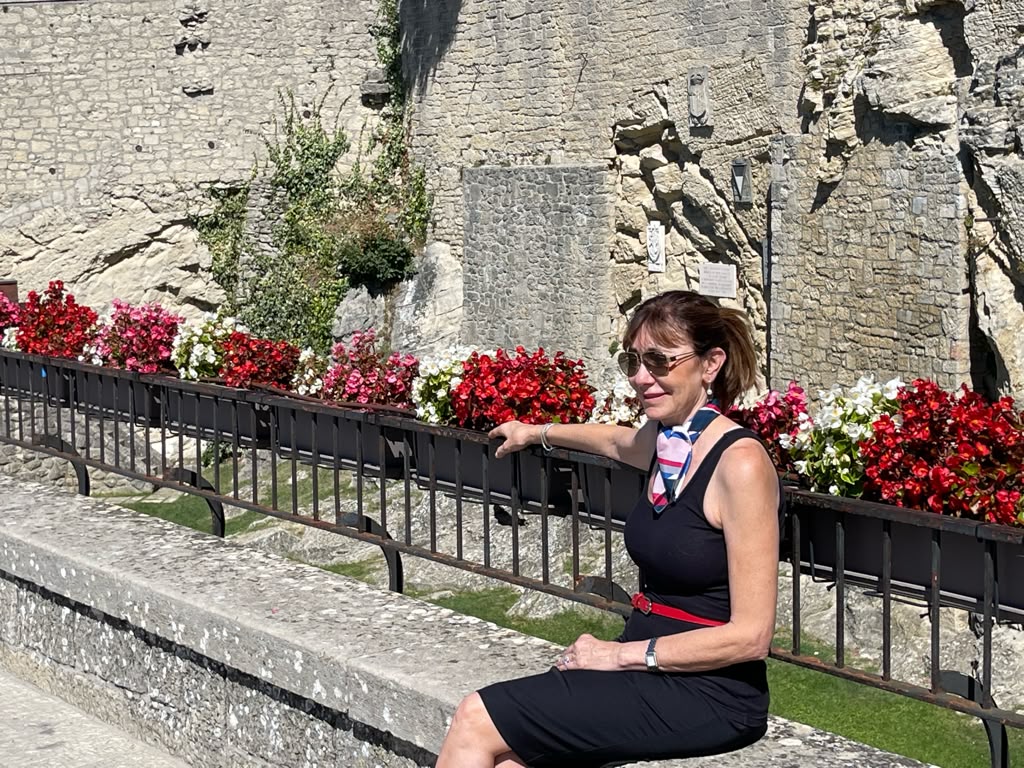
From Serravalle to the United States, with San Marino always in her heart. Roberta Felici has spent most of her life in America, but her connection to Mount Titano has remained strong and is now being passed on to the younger generations of her family. In this interview, she talks about her parents’ emigration, her childhood in Detroit’s Sammarinese community, her career in optometry, and her relationship with a Republic she continues to return to every year.
Can you tell us your family’s story? When and why did you leave San Marino for the United States?
“I grew up in many different places — the true life of an immigrant. I was born in Serravalle, in my grandparents’ home, in 1961. My father, Vincenzo Felici, from Chiesanuova and Dogana, had recently emigrated to New York. My mother, Graziella Sarti, from Serravalle, stayed on with her own parents until I was born. Six months later, my mother and I set sail for the port of New York. I still have the photograph from the passport we shared — my mother holding me, a newborn, in her arms: one single passport for the two of us.
Two years later, my sister Lucia was born in Franklin Square, on Long Island. My father’s parents fell ill, and my mother, my sister and I returned to San Marino to help them. During that time my mother also became unwell, so we ended up living for two years with my maternal grandparents, Rosa Tamagnini and Luigi Sarti, in Serravalle. I attended nursery school at the convent in Serravalle.
I was five years old when we went back to the United States in 1966. My father had moved to Detroit for work. I started school there and stayed on after class to learn English, with the help of a tutor and another young Sammarinese immigrant. My brother John was later born in Dearborn, Michigan.
From the age of five, I grew up in Detroit alongside many other Sammarinese immigrants, though there were also people who had come from other parts of the United States and from Mexico. We lived in the shadow of the Marathon Oil refinery and the Morton Salt mines.
It was a wonderful childhood, in a close-knit neighbourhood full of friends who also came from San Marino. When we played outside, our mothers kept an eye on all the children and made sure we behaved. In summer, after work, my father and many other Sammarinese men would sit on the front steps of their houses, talking and listening to the Detroit Tigers games. In autumn they would go to Eastern Market to buy grapes for making wine. In winter they made sausages and played Bestia and Scopa, while we children ran around and played in the basements. In spring it was time to plant the vegetable gardens.
In the early 1970s, many immigrants left that area to move to the Detroit suburbs. Our family, together with about a dozen other Sammarinese families, moved to the Downriver area. Our Sammarinese fathers worked in construction — as bricklayers, carpenters and cement workers. When they weren’t busy with their own jobs, they helped one another build their houses.
Then came the time for me to go to university. I studied at the University of Michigan and Michigan Technological University, and earned my doctorate in optometry at Ferris State University.”
After your studies, how did your personal and professional life develop in the United States?
“I moved to Ann Arbor, Michigan, where I stayed for the following twenty years. I got married at 23 and became the mother of three children, Webster, Adrian and Arianna. I also became a second mother to my niece Sarah after her mother, my sister Lucia, died of breast cancer at just 34.
In Ann Arbor I worked as an optometrist at the University of Michigan Health Services Eye Care Clinic, carrying out eye exams and medical eye care for students, staff and faculty, as well as for athletes from the University of Michigan’s sports teams.
But life as an immigrant continued. At forty, I moved to Florida for my husband’s job. There I worked in clinics specialising in eye care, carrying out vision exams, cataract screenings and medical eye examinations. I also had the chance to work with centres specialising in retinal disease and glaucoma, working as a low-vision specialist with patients who had reduced or lost their eyesight.
It was work I loved. I used my clinical and medical skills to help patients make the most of their remaining vision in daily life, while also offering information and support to them and their families.
Even today I keep moving around. My husband Stuart and I have seven children between us — four live on the West Coast and three on the East Coast. So we split our time between the south-eastern United States, the Pacific Northwest, especially Seattle and Portland, and of course the Republic of San Marino. I’m still an immigrant, and I’m still growing.”
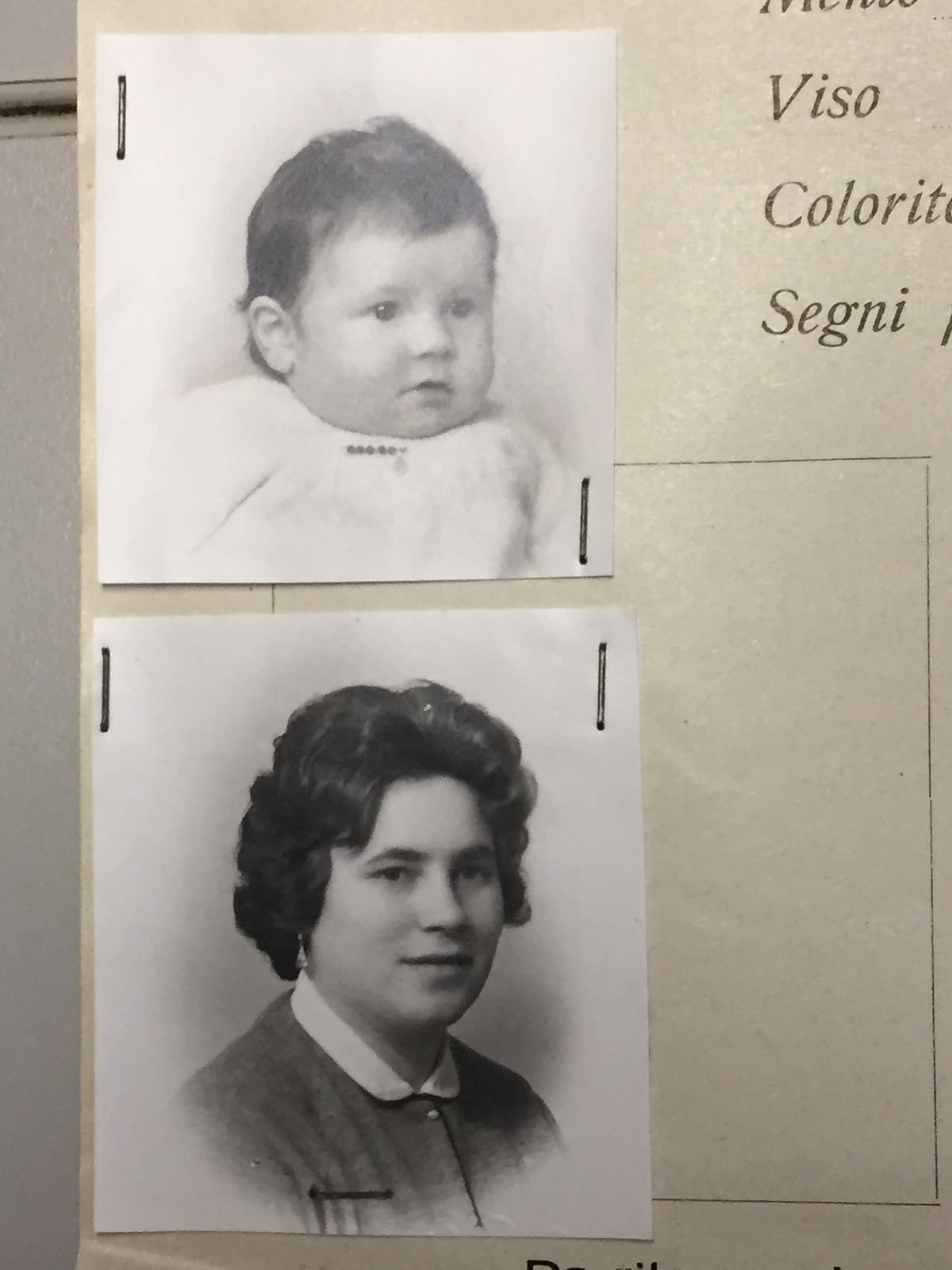
Growing up in Detroit, how present was your Sammarinese identity in everyday life?
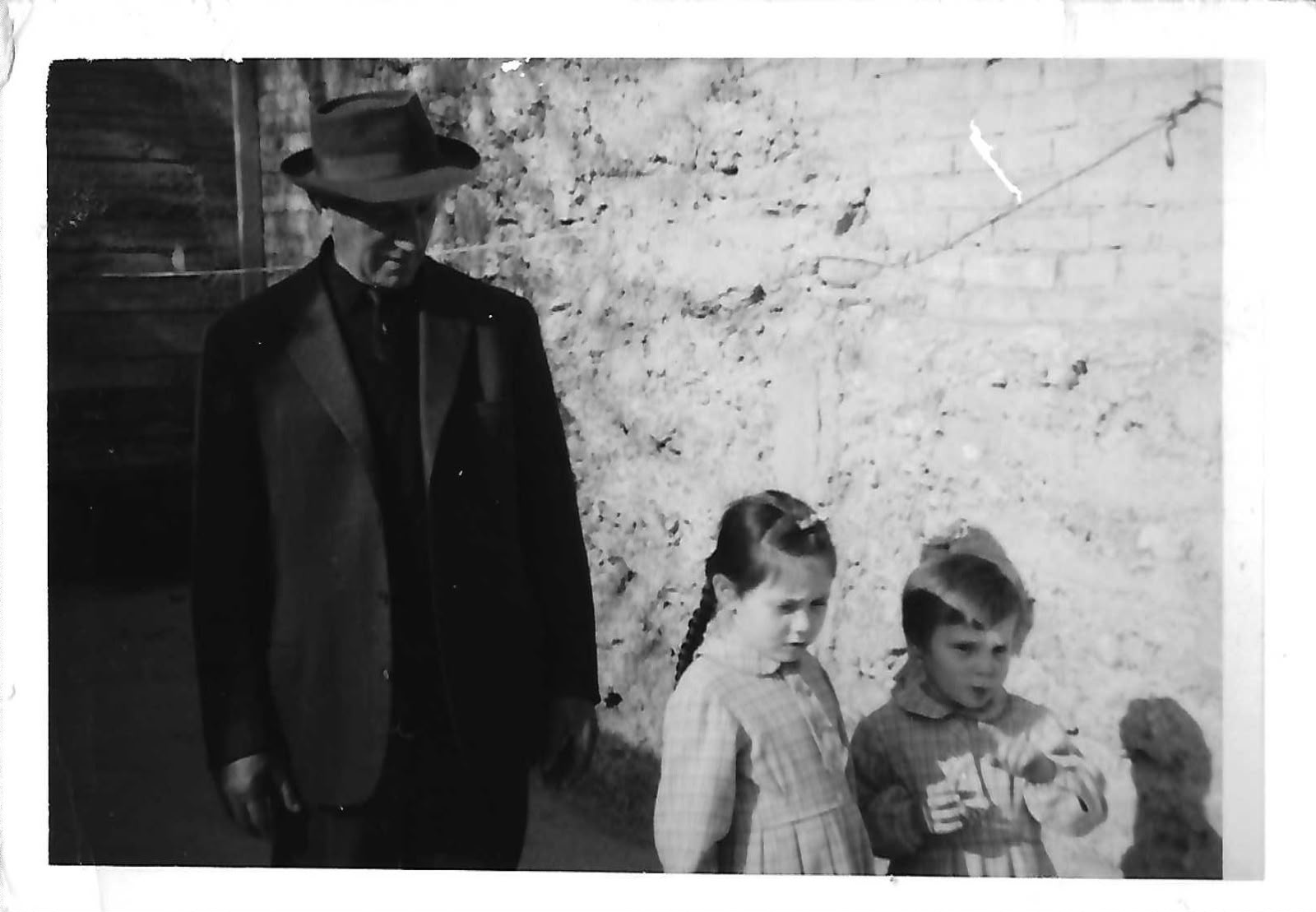
“When I left home for university, I suddenly found myself in an environment where I was the only Sammarinese person around. That was when I realised that, for the first eighteen years of my life, I had essentially grown up Sammarinese, within my family and our community. Finding myself among American students from all over Michigan and beyond was both challenging and exciting.
My Sammarinese roots were very present in everyday life: I grew up Sammarinese in another country. My sister Lucia, my brother John and I grew up in the Oakwood area of Detroit. It’s perhaps a story common to many immigrants: arriving and settling in neighbourhoods left behind by those who came before, and then following the same path ourselves. Our area was home to many families who had come from San Marino to work. We grew up speaking Italian and the Sammarinese dialect together with many of our friends.
I remember very well how, on summer Sundays, our family and many other Sammarinese families from Oakwood would go to Camp Dearborn, an artificial lake built by Henry Ford, to picnic and swim. There was always plenty of Sammarinese food: crescioni, prosciutto, cheese, homemade sausage and much more. On summer evenings, after work, my father and the other Sammarinese men would sit on the front steps “per veglia” — to keep watch and talk. Some summers we also went back to San Marino to spend time with our grandparents, aunts, uncles and cousins.
In autumn I would sometimes go with my father to Eastern Market to buy grapes for the wine. We would climb onto the rail cars, taste the grapes, and he would decide which ones to buy. Our basement was a proper cellar, with barrels, a press and green bottles. My father made wine together with some friends, and sometimes we children were allowed to help crush the grapes. With what was left over, they also made their own version of mistrà.
In winter, my father and his Sammarinese friends made sausages, salami, prosciutto and coppa di testa, which were hung in the cellar to cure. When my American friends saw them they would ask, “What is that?” On weekends the adults often played Bestia or Scopa at each other’s houses. We children ran around and played in the basements until we fell asleep, and were then carried home. And there was always the traditional Christmas Eve dinner, with many fish dishes and brodetto.”
Are there traditions or values your family passed on to you that you still keep alive today?
“We grew up attending the San Marino Club in Troy, Michigan, where we took part in many celebrations. My father was a member, and my brother John still is today. I’m still part of the Women’s Auxiliary of the San Marino Club, just as my mother was.
My parents, Vincenzo Felici and Graziella Sarti, placed enormous importance on education, and encouraged us to go to school and then to university. My father was a self-taught man and read a great deal. In the 1970s he bought us a full set of encyclopaedias, and after dinner we would look up subjects that interested us and read about all kinds of things together. There was no internet back then. My mother always carried her Italian-English dictionary with her as she tried to learn the language.
Education mattered enormously to my parents, who had both had to start working before finishing high school. They encouraged my sister, my brother and me to study hard and go to university. They supported us at every step.
As for traditions, I still make tagliatelle and lasagne at home. My children appreciate it today, though I remember well how much they complained when they had to help me roll out the pasta. Over the years they’ve come to understand how important it was to learn, and today they make their own fresh pasta, lasagne, cappelletti, ravioli and other traditional dishes.
The Christmas Eve fish dinner is still a very important occasion. In recent years it’s mainly been my children preparing it, with a little help from me. They also enjoy coffee with mistrà and homemade limoncello on special occasions. But what really matters to me is knowing that San Marino holds a special place in their hearts too.”
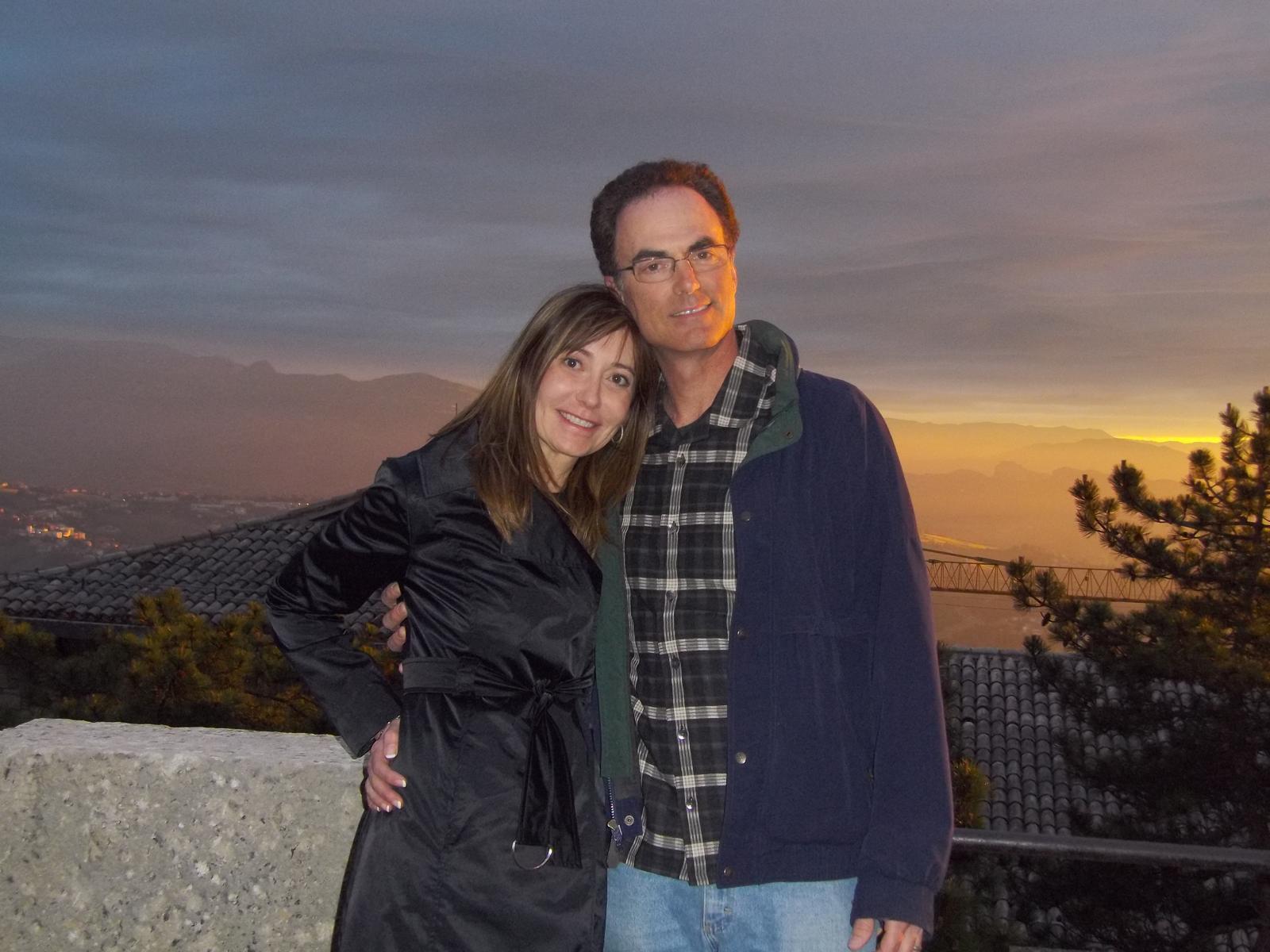
What is your relationship with San Marino today? Do you still return, and what does it mean to you?
“Despite all the places I’ve lived, when I return to the Republic of San Marino every year, I feel at home. It’s here, surrounded by childhood friends and family, where I can visit the places where generations of my ancestors rest, that I truly feel my soul at peace.
I try to pass this precious legacy on to my children, my grandchildren and my family. My children came to San Marino many times during their childhood and continue to return as adults. My little grandson will soon make his first trip to San Marino. My children love this country and make time to come back, making the effort needed to keep our connection to our roots alive.
Every year, when I’m in San Marino, I go to the Church of Sant’Andrea in Serravalle, where my parents were married and where I was baptised. I light a candle and say a prayer to give thanks for all of it.
Continuing to pass on this legacy, this gift, to my children and to the new generations of the family matters enormously to me. Knowing that they too make the effort to keep our bond with San Marino alive is one of the greatest gifts of my life.
My husband Stuart has also fully embraced this part of our family. When we’re in San Marino, he spends time with my cousins, aunts, uncles and friends, and he has even studied Italian. He’s getting quite good at it. He has welcomed all of them, and they, in turn, have welcomed him.”
In what ways have your Sammarinese roots shaped who you are today, both personally and professionally?
“I consider myself very fortunate. I’ve had the chance to belong to two cultures and know two languages, as well as having a career in medicine that has allowed me to help people.
Having lived in different places, each with its own beauty, and having had the chance to meet and work with so many different people, has given me a broader view of the world and of human nature than I probably would have had otherwise.
Growing up in a Sammarinese family and within a Sammarinese community, while at the same time getting to know another country that is also beautiful, taught me some fundamental principles about how to live a good life. In the end, it doesn’t matter where you are, as long as you’re surrounded by loving, hardworking and kind family and friends. That’s a beautiful life.”
If you had to describe San Marino to someone from Seattle who had never heard of it, what would you say?
“I always describe it this way: ‘The Republic of San Marino is the oldest republic still in existence in the world. We are the third smallest country in the world, set on a single mountain, about twenty kilometres from the Adriatic coast. From the top of the mountain, with its medieval castles, on clear days you can see the mountains to the west and the blue waters of the Adriatic to the east. There’s excellent food and, of course, the most wonderful people in the world.’ Though on that last point, I might be a little biased.”
What message would you like to send to the citizens of San Marino and to the Sammarinese community around the world?
“We’re fortunate to have been born in one of the most wonderful places in the world. For my parents and others of their generation, being forced to leave the Most Serene Republic out of the need to find work shows just how hard life was in the period after the Second World War.
Many later returned, bringing back with them the skills and resources they had gained abroad. San Marino has also been able to benefit from those experiences.
I believe technological innovation has made it far easier to stay in touch from anywhere in the world, and that future generations of Sammarinese will be able to maintain a relationship with San Marino, if they wish to.
The community of Sammarinese abroad will remain a great resource for San Marino for many generations to come. I hope the country knows how to welcome it and make the most of it.”