The association agreement between San Marino and the European Union now appears to be all but sealed, with the signing expected in September. Yet many keep forgetting that this is a starting point, not a finish line. The agreement itself will undoubtedly bring benefits, but nothing falls from the sky: opportunities must be identified, built, and played well. And among the many now opening up, there is one that touches us closely as Sammarinese, because it revives a historic chapter of the country’s story in a modern guise: online gaming.
Let’s take a step back. From 1945 to 1957, San Marino was governed by a coalition of socialists and communists, the only such case in Western Europe — an anomaly that Italy, in the depths of the Cold War, tolerated only reluctantly. To keep public finances afloat under what amounted to a de facto embargo, that government made several bold moves: it introduced divorce at a time when it was still taboo in Italy, and in 1949 it opened the Kursaal, San Marino’s first casino. Tourists flocked in, revenues grew, and this tiny state carved out its own slice of the gaming market. Italy was far from pleased: the Scelba government imposed a customs blockade at the border to force its closure, and in 1951, after just 17 months, San Marino raised the white flag. It is no coincidence that that government was the direct forerunner of today’s PSD — an executive that had dared to go against the tide, boldly.
As we know, the project failed because of Italy. It is one of many examples showing how, for decades, the absence of international agreements meant depending entirely on whatever Italy decided at any given moment, with no legal framework to fall back on. With the association agreement, something changes: San Marino gains legal certainty and guaranteed access to the single market, no longer the unchecked discretion that allowed Rome to strangle the Kursaal in barely a year.
And this is precisely where the issue becomes relevant again, looking at the country in Europe that has turned regulated gaming into an industrial pillar: Malta.
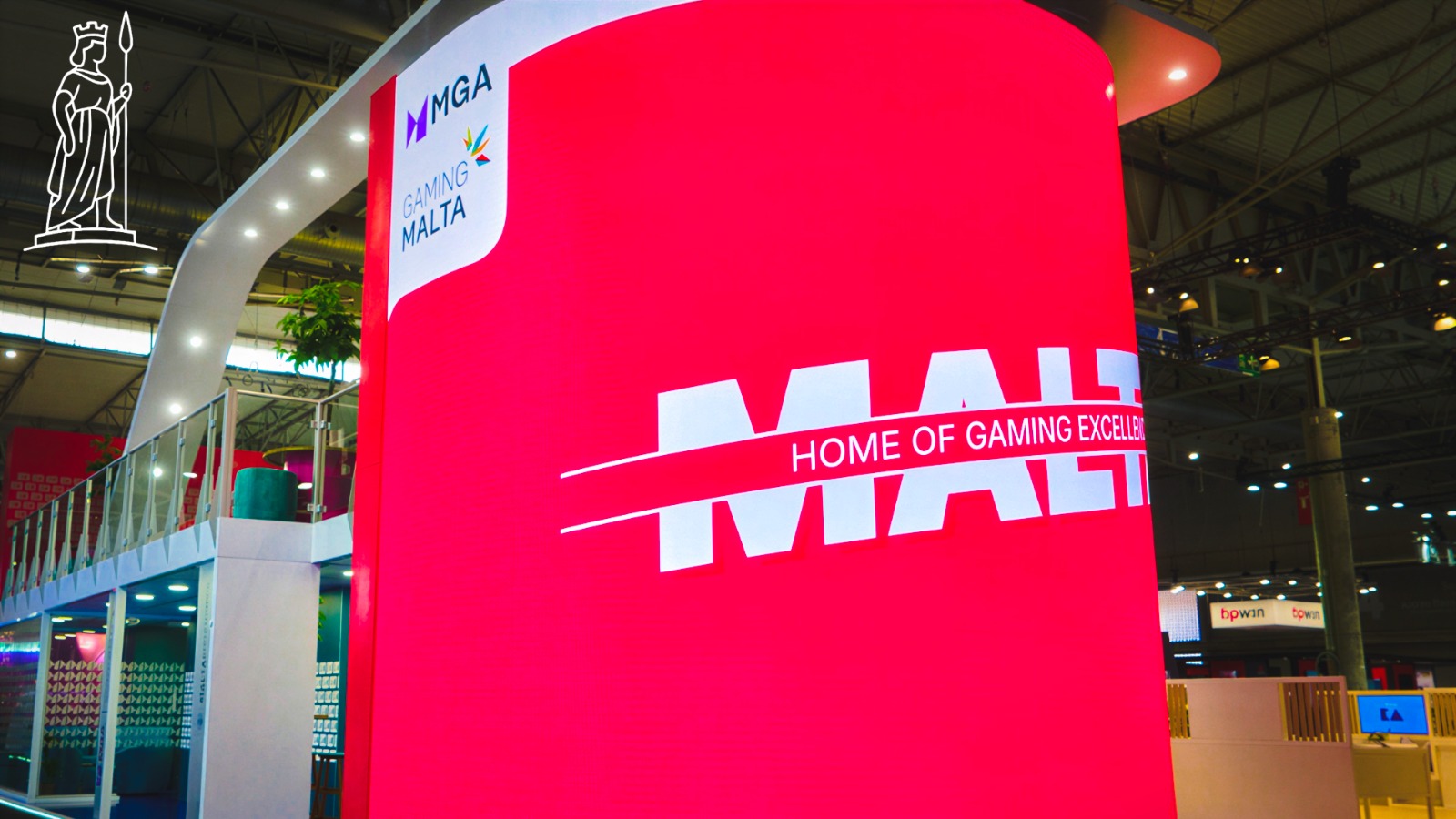
Malta was the first EU member state to regulate remote gaming, through the Remote Gaming Regulations of 2004. The Malta Gaming Authority now operates under the 2018 Gaming Act. The figures speak for themselves: by the end of 2024, there were 315 companies holding 323 licences; more recent estimates put the number of active operators at over 500, accounting for more than 10% of all online gaming platforms worldwide. The sector generates roughly €1.39 billion in added value, nearly 12% of Malta’s entire economy. This is no side detail — it is a pillar of the national economy. In 2025, the MGA still imposed fines exceeding €2.8 million and suspended four licences, a sign of tightening oversight, but this has done nothing to dent Malta’s standing as Europe’s benchmark in the industry.
And the market surrounding Malta is far from small. Online gaming in Europe is worth between $45 and $50 billion in 2025, with annual growth estimated at 6% to 7%. Meanwhile, illegal, unlicensed gaming is worth more than €90 billion in the EU alone, up 14% compared to 2024, resulting in an estimated tax loss of nearly €23 billion for member states, with more than 6,200 operators offering services without any authorisation whatsoever. In other words, the demand is there regardless: the real question is who captures it, under what rules, and who reaps the fiscal and economic rewards.
Here, however, honesty is needed rather than easy enthusiasm. Gambling is one of the few sectors explicitly excluded from EU harmonisation: there is no “EU passport” allowing an operator licensed in one country to automatically sell its services anywhere in the Union. Even today, among full EU member states, Germany, France, the Netherlands and Spain still require local licences regardless of a Maltese one. So no: the association agreement does not hand us a ready-made market, and it would be misleading to present it that way.
What the agreement can genuinely change, however, is the context in which we build our offering: a stronger international reputation, less burdened by the stigma of being a non-cooperative jurisdiction; easier access to European banks and payment providers, currently the Achilles’ heel for anyone seriously wanting to operate out of San Marino; and greater credibility in the eyes of international operators considering us a viable base. These are precisely the ingredients Malta has capitalised on for twenty years. I see no reason why we couldn’t claim a slice of that market from Malta — or better still, capture the demand that today goes unregulated altogether, given that we have even greater agility: we can draft a law and a regulatory framework in months, not years, something a large state simply cannot afford to do.
Online gaming, today, is just one example among many. It is not the solution, nor the top priority: it is one tile in a mosaic of opportunities that the agreement opens up but does not complete on its own. It will take legislation, political will, and the patience to build a reputation we do not yet have. Still, it is also proof that opening up, rather than closing off, is what brings new revenue to San Marino. Unlike in the past, Italy’s direct control over our choices carries ever less weight: go ahead, Rome, try putting up borders online. It is up to us, then, to keep working with the same seriousness that brought this agreement home, so that we can truly make the most of it.
Nicholas Perpiglia