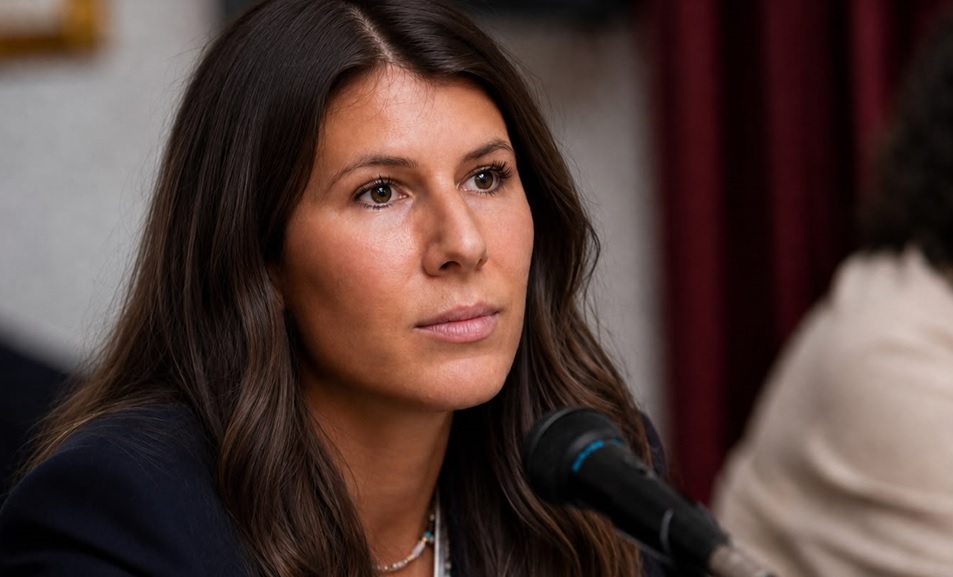
Today we launch a new space for in-depth commentary, with contributions from Giulia Muratori, secretary of Libera San Marino.
*******
Starting today, the new family law comes into force.
It is a law we worked on for a long time, one that tries to answer two very concrete problems: providing economic support to families and making it easier to balance children and work.
Having a child should never become a financial burden, but it also should not mean that one parent — usually the mother — has to give up their professional path.
And today this concerns all families even more than before. With the rising cost of living, having two incomes is no longer just a choice for many households, but a necessity. At the same time, raising a child requires time, presence and organization.
The real challenge is to allow both parents to work without sacrificing the time needed to raise their children.
The new law tries to act on both fronts.
On one hand, it strengthens economic support for families: from the baby bonus to family allowances, from nursery school subsidies to greater financial protection during maternity leave and parental leave.
On the other, it takes important steps forward in balancing work time and family time.
Fathers will now have 20 paid days to use during the child’s first year of life. Parental leave can be shared more evenly between parents and will come with stronger economic protection. Periods of maternity leave and parental leave must no longer penalize career progression. And part-time work taken during a child’s early years will be given greater protection, including for pension purposes.
These are different measures, but they share a common thread: raising a child is the responsibility of both parents, and having a child should not become a professional penalty for either one.
Yet we know that, even today, the greater share of family care still very often falls on women.
San Marino’s own data tells this story plainly. Women make up around 43% of the workforce. In the public sector, their presence is very strong and reaches significant levels even in positions of responsibility. In the private sector, however, women account for about 40% of employees but only 19% of managers and equivalent roles. And more than three out of every four part-time workers are women.
Part-time work is not a problem in itself. For many families it is a useful solution and can be a genuine choice. The problem arises when it becomes almost automatically the woman’s default solution for managing childcare.
Because working less often means earning less and having fewer opportunities for professional growth.
This is exactly the point the new law tries to address: not simply asking women to reconcile work and family, but creating the conditions for the family as a whole to reconcile them better.
Giving fathers more space means allowing them to be more present in their children’s lives. Making family care more balanced means allowing mothers not to be forced automatically to choose between work and family. Ultimately, it means giving both parents more freedom.
And the numbers tell us this is not a San Marino-only issue.
In these very days, two major international reports have been published that, from different angles, show how much progress has been made — and how much remains to be done.
The first is the World Economic Forum’s Global Gender Gap Report 2026, which measures gaps between men and women in the economy, education, health and political participation.
Education and health are now very close to parity. The gap remains far wider in economic participation, where 61.7% of the gap has been closed, and especially in political power, stuck at just 22.1%.
One finding speaks directly to the family issue: women are more than four times as likely as men to interrupt their careers to devote themselves full-time to parenting. And even after returning to work, a gap in career advancement opportunities persists.
The second report is the World Bank’s Women, Business and the Law 2026, which takes a different lens, analyzing the economic and legal conditions of women across 190 economies.
San Marino does not appear among the 145 economies covered by the Global Gender Gap Report, but it is analyzed by the World Bank. The picture that emerges shows real strengths precisely in parenting, childcare services and pensions, while there is still room for growth when it comes to career advancement, pay, entrepreneurship and economic leadership.
The new law, then, is a step forward. It is not the finish line.
A year from now we will need to look at the numbers again and ask ourselves some very simple questions: how many fathers actually used the new leave entitlements? Has the burden of family care on women decreased? Has the use of part-time work become more balanced between parents? Have the new protections helped women avoid slowing down their careers?
If the results are not what we hope for, we must have the courage to act again.
And I believe the next area we need to work on is precisely this: not just guaranteeing women a job, but creating greater opportunities for them to grow professionally, especially in the private sector.
Training, management career paths, transparent criteria for advancement and promotion, and greater attention to female representation in positions of responsibility are all issues we can begin to address.
The same reasoning applies to politics.
Over the past twenty years, San Marino has significantly increased the presence of women in the Grand and General Council (Consiglio Grande e Generale). And this is good not only for women, but for the quality of representation as a whole.
I saw this firsthand during the work on the family law. The contribution of the women in the Council, even from different political positions, brought real experiences and concrete problems to the table and helped improve several aspects of the bill.
For a long time I was skeptical about gender quotas. I have always believed that a woman should not obtain a role simply because she is a woman. I still believe that.
But I also believe that, in a period of cultural change, it can be useful to create the conditions for more women to have the chance to participate, gain experience and take on responsibility. Not to replace merit, but to widen the starting opportunities.
The goal should be to reach a point where tools of this kind are no longer needed.
Ultimately, family, work and participation share something in common: they all concern the freedom to choose.
The freedom to choose to have a child without fearing financial ruin. The freedom to choose to be a present parent without giving up work. The freedom to choose to grow professionally without family becoming an obstacle.
The family law tries to take a step in this direction.
It comes into force today. Now we must make it work, measure its results, and have the courage — if needed — to take the next step.
Giulia Muratori