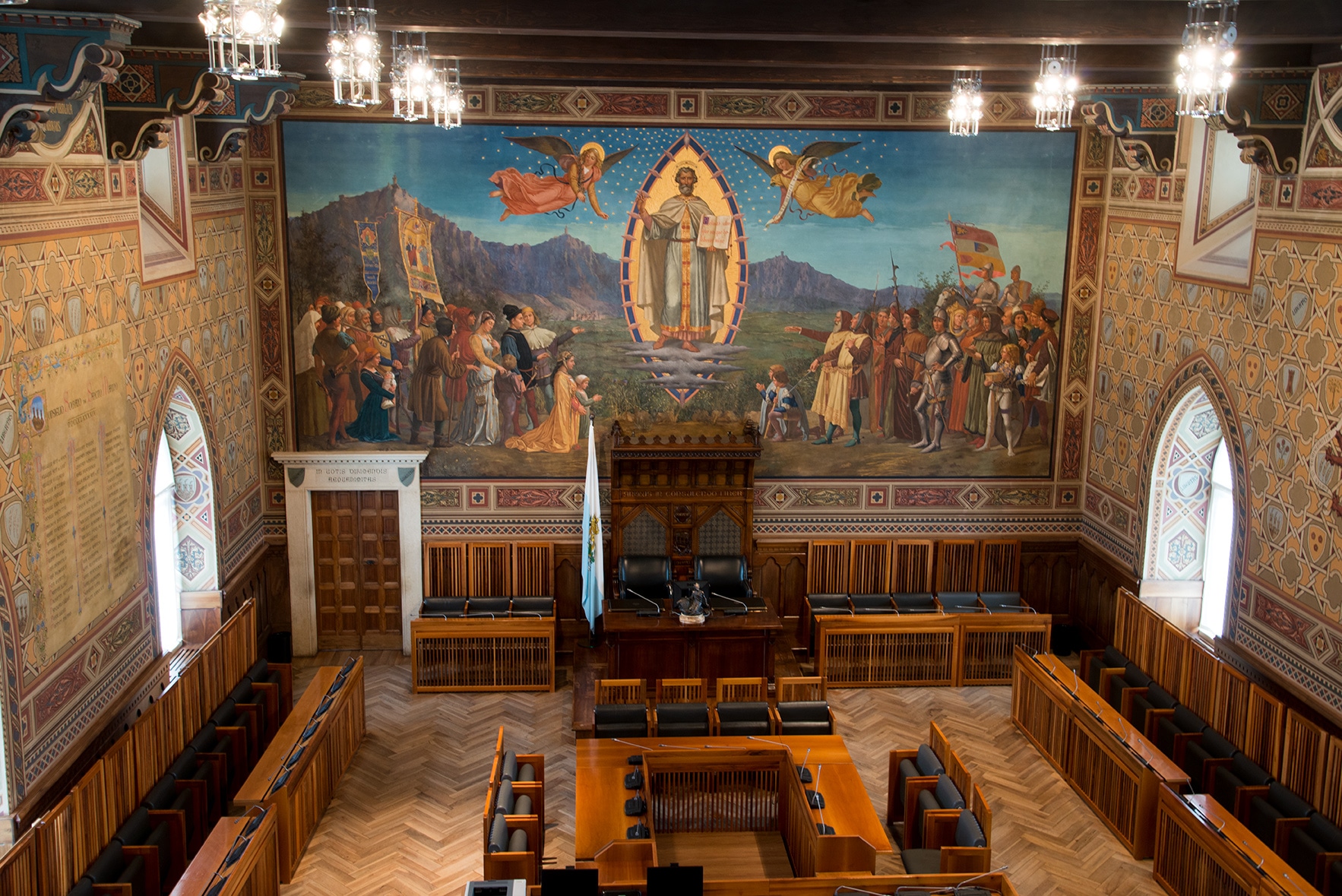
Soaring utility bills, the housing emergency, rising public spending and the need to find new resources for investment without further burdening citizens’ wallets. These were among the topics dominating Wednesday afternoon, 25 November, in the Grand and General Council (Consiglio Grande e Generale), where debate continued on the 2027-2029 draft budget, which has now passed its first reading.
Chief among the concerns is the trajectory of inflation, which could reach 3.5% in 2027, with heavy consequences for household purchasing power. A “social time bomb,” as Luca Gasperoni (PDCS) described it, that needs to be defused through structural measures. Also on the table is the sustainability of the pension system, with the State’s contribution to pension funds set to rise from 22 million euros in 2027 to 40 million in subsequent years.
Revenue is another hot topic. Luca Della Balda (Libera) urged lawmakers to seize the opportunities offered by the Association Agreement with the European Union to attract capital, businesses and foreign investors, reviving the proposal for a law on holding companies. The goal is to broaden the taxpayer base without increasing the overall tax burden.
On the issue of public debt, which has reached 1.17 billion euros, Guerrino Zanotti (Libera) pointed out that at least 450 million euros stem from the Cassa di Risparmio banking crisis. The rise in current spending is also a source of concern. As highlighted by Vladimiro Selva (Libera), a roughly 30-million-euro increase in tax revenue has been matched by a similar rise in expenditure, while investment has fallen from 60 to 56 million euros.
Opposition parties called for genuine dialogue ahead of the second reading. “Bring us to the table to discuss this, because otherwise it will be inevitable that come December we’ll be back in this chamber fighting the same battle as every year,” warned Gaetano Troina (D-ML). Repubblica Futura, for its part, criticized the lack of a clear political strategy, the rise in spending on staff and consultancies, and the absence of structural spending reform.
Among the most debated chapters was healthcare and the future of the State Hospital. Sara Conti (RF) questioned the increase in funding for the ISS (the social security institute) given what she described as a lack of improvement in services. From the majority, Giuseppe Maria Morganti (Libera) defended the decision to allocate greater resources to welfare, while Tommaso Rossini (PSD) pointed to the new hospital as one of the strategic investments for the Republic’s future.
Considerable attention was devoted to possible measures against the rising cost of living. Lawmakers discussed ways to curb utility bills, revise the incentive system and support the most economically vulnerable groups. Independent councillor Michela Pelliccioni proposed an agreement with major retailers to freeze prices on essential goods, an enhanced Smac rebate on basic necessities, fuel discounts and tax breaks for rent-controlled housing.
The housing emergency itself is shaping up to be one of the key political flashpoints of the second reading. Libera has called for direct State intervention to increase the availability of housing, while also addressing problems linked to “atypical” residences.
Having suspended debate on the budget bill, the Council then turned to the draft law on preventing and combating violence and harassment in the workplace, which reached the floor on the very day of the International Day for the Elimination of Violence against Women. The motion for fast-track procedure was approved unanimously, with 50 votes in favour.
Among the key innovations outlined by the Secretary of State for Labour, Alessandro Bevitori, is the introduction of paid leave of up to 100 working days for victims enrolled in protection programmes certified by the ISS. The leave may be taken in instalments over a three-year period, with full salary and social security coverage. Protections will extend to employees, self-employed workers and public administration staff. The legislation will also address harassment carried out through digital and online tools.
This is far from a marginal issue. According to data from the CSU and USL cited in the chamber by Dalibor Riccardi (Libera), the incidence of violence and harassment in the workplace stands at around 58%, rising to 65% among those without permanent contracts and to 69% among women in that same category. Mobbing and abuses of power are among the most widespread phenomena.
More broadly, in the first half of 2026, San Marino opened 33 criminal proceedings related to gender-based violence, with 19 women and 17 minors recorded among the victims, as noted by Barbara Bollini (PDCS).
While there is broad political consensus on the law’s objectives, several points still require clarification. One of the most debated concerns resignation for just cause, particularly within the public administration. Many have called for alternative solutions to be considered, such as a transfer to another office, so that victims are not forced to give up their jobs or careers. The majority clarified that resignation is an option available to the worker, not an obligation.
Other key points of discussion included the confidentiality of complaints, the right to a defence, strengthening psychological support services and listening centres, the economic independence of victims, and the establishment of rehabilitation programmes for perpetrators. One question remains open: what happens to a resignation for just cause if legal proceedings conclude without any sanction against the accused.
Council proceedings were suspended at 7:30pm, with the session set to resume at 9pm.