A monoclonal antibody setting out from a plant in the United States or India and arriving at a warehouse in San Marino can spend six or seven days in transit. For the entire journey it must stay within a narrow temperature window, and if it strays outside that range for even a short stretch, the drug can no longer be used.
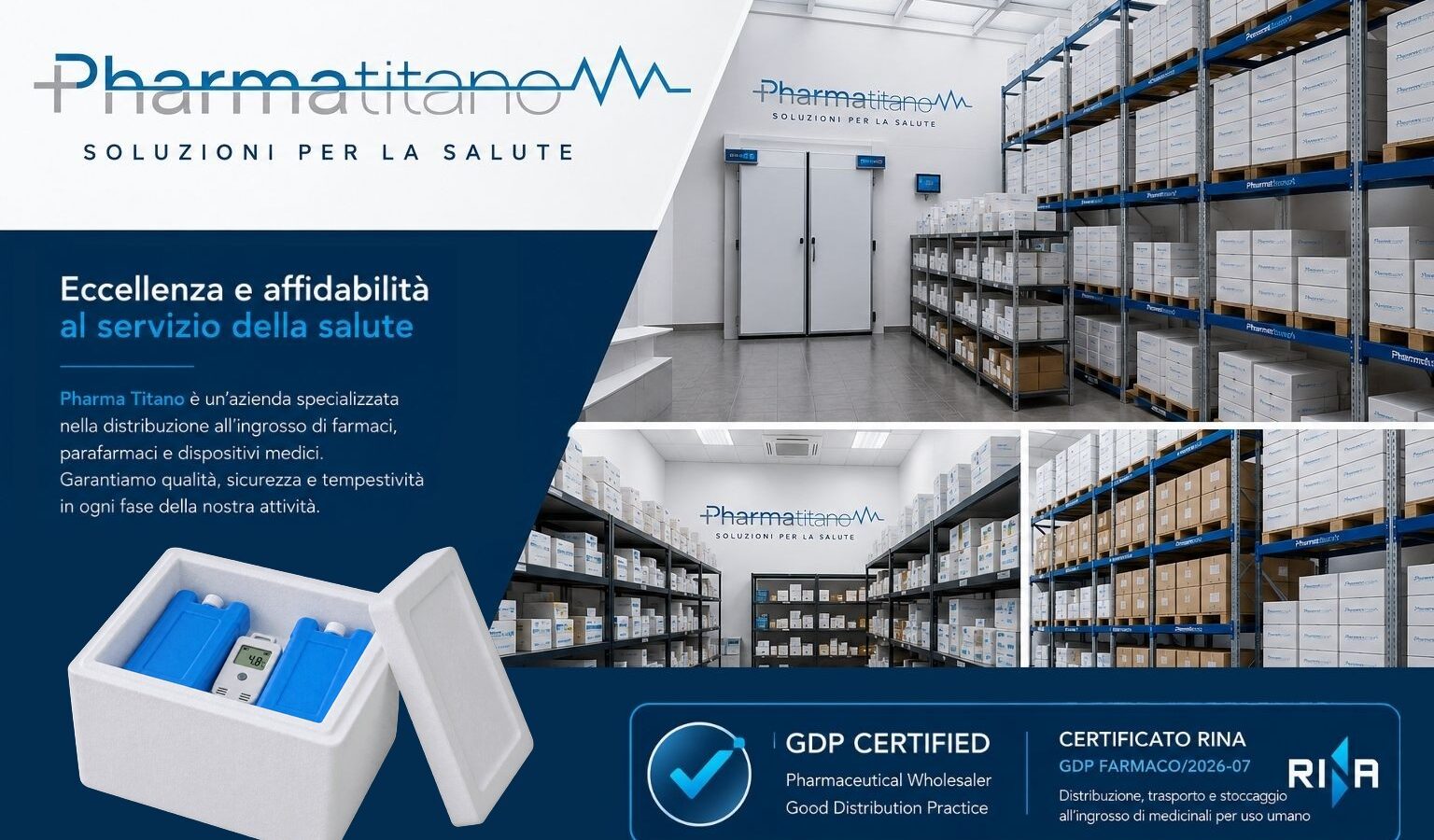
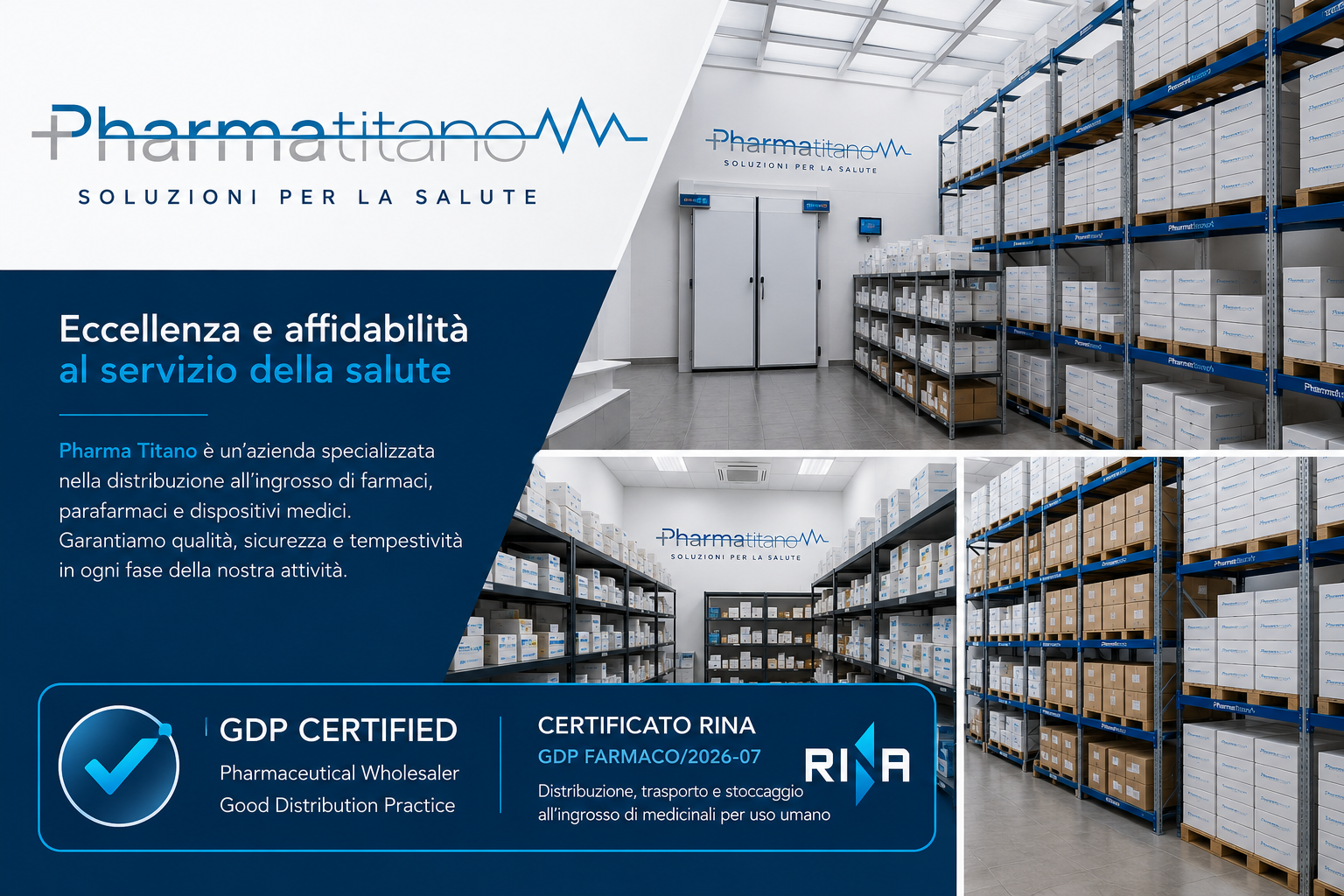
Pharma Titano is the Republic’s first warehouse certified under GDP, the European standard for good distribution practice of medicines, obtained through the certification body RINA, and it handles shipments of this kind all year round.
Two to eight degrees — and some drugs down to minus forty
Not every medicine has the same requirements.
Some travel at room temperature, others at a controlled temperature between 15 and 25 degrees, while cold-chain products are kept between 2 and 8 degrees. A few, rarer cases must be kept as low as minus 40. This range is not a suggestion: it is written into the product’s storage conditions and must be guaranteed in the warehouse exactly as it is during transport.
The box with ice packs — and the device that keeps a record
On long journeys, insulated boxes fitted with refrigerant elements are used, designed to keep the internal temperature stable for as long as six or seven days.
Inside the box travels a datalogger, a small recording device that switches on at departure and off on arrival: once connected to a computer, it produces the complete temperature curve of the journey, hour by hour.
Alternatively, it is possible to choose carriers that guarantee continuous refrigeration for the entire route, using vehicles equipped to keep internal temperature constantly under control.
Carriers, too, are GDP-certified and renew their certification every year, so that the chain remains monitored from one end to the other.
Forty-eight hours to send the data
For the most demanding shipments, this monitoring is also bound by a contractual deadline: the datalogger data must be submitted within 48 hours of the goods arriving at the warehouse, or penalties are triggered.
Upstream of all this lies supplier qualification, carried out before any purchase: checks confirm that the distributor is GDP-certified and that the manufacturer is GMP-certified, the standard for good manufacturing practice.
Patients receiving treatment in hospital see none of this. They see a vial. Behind it lies a chain measured in degrees and hours — one that, to hold up, must work flawlessly every single time.