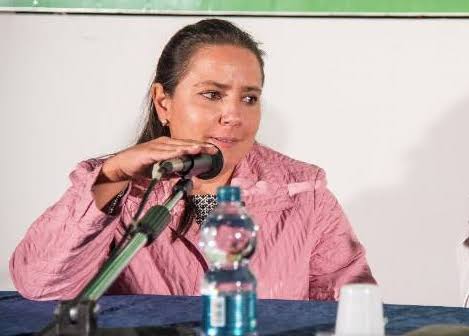
During item 7 of the Grand and General Council‘s agenda, in the debate on the ratification of the Association Agreement with the European Union, Maria Luisa Berti (AR) asked the State Congress to bring a post-ratification plan before the Council.
The councillor, recalling her initial reservations about the negotiations, described the agreement as a balanced compromise between opening up to the European market and safeguarding San Marino’s independence. She also pointed to an early test of implementation: streamlining public administration procedures and ensuring clear response times for citizens, professionals and businesses.
Her full remarks follow below.
«There are decisions through which the Grand and General Council is called upon to set a direction for the life of the Republic, with effects that will be felt for many years to come. The ratification of the Association Agreement we are about to vote on is certainly one of these.
Already within the Foreign Affairs Committee, we had the opportunity to highlight how the signing in Brussels on 19 October marked the culmination of a lengthy negotiating process. Today it falls to the entire Council chamber, not just the Committee’s members, to take on the political responsibility of giving formal shape to that choice.
I believe it is right to acknowledge here, too, the contribution of everyone who, across the various legislatures, worked on this hugely important mission. I am referring to the Secretaries of State, the institutions, the officials, the diplomatic corps and all the offices of the Republic.
San Marino has shown that it can achieve a goal of shared — if not unanimous, then certainly broad — interest, through the various governments that have succeeded one another. Indeed, this was a path that had been put to voters in several election manifestos, across different legislatures, not only by this majority.
The Agreement opens the way for San Marino to participate in the European internal market, as has by now been said in every forum, under the conditions and gradual timeline set out in the protocols and annexes.
This will certainly be an important prospect for businesses, for professionals, for workers and above all for young people — not only those who wish to study abroad, but also those who want to gain experience elsewhere, build a future for themselves, and grow by engaging with those outside our borders, while still keeping a bond with our Republic.
I think it is important to point out — and I say this personally, as someone who from the outset always harboured a certain reservation about this negotiation — that the Agreement is truly the result of a fair compromise between our country’s need for relations beyond its borders and the overriding need, for a small state like San Marino, to preserve its own specificities, its sovereignty and its independence. I believe this history of independence places upon us, especially as we enter the phase that begins today, the responsibility of choosing how to continue exercising that sovereignty and independence, with the foresight and wisdom to seize the elements of the Agreement that can benefit our country’s growth.
I said there is a before and an after to ratification. The vote we cast today on this ratification obliges us to be demanding and not superficial in the phase now opening. The adjustment work ahead will be extensive and will require laws, regulations, procedures, technical expertise and resources.
In deciding how to carry out this commitment, we should ask ourselves a concrete question: which part of our system can we make work better through the work we are called upon to do?
I am thinking above all of public administration. For a business, a professional, a citizen, the quality of institutions is also measured by the ability to know which office to turn to, which documents to submit, and how long it will take to receive a response.
Reviewing procedures is an opportunity to eliminate duplicated steps that are overly long or poorly accessible to the public. I believe the Agreement can also be an opportunity to strengthen the system of controls and to pursue a policy aimed at limiting, as far as possible, monopoly regimes for certain activities.
In this way, we can create concrete and effective safeguards to prevent what we have, unfortunately, seen happen in past years, when this country became fertile ground for unscrupulous actors who arrived here and tried to act as though they owned the place.
There will be many areas requiring our commitment. Precisely so that the commitment to the post-ratification phase is a concrete one, I appeal to the State Congress to bring before this chamber an implementation plan with priorities, deadlines, responsibilities and an estimate of the resources needed, in terms of workload, to put the contents of the Agreement into practice.
The Council must be able to know in good time the legislative choices that will be put before it, and must receive regular updates on results achieved and difficulties encountered.
We know that some Secretariats of State have already done this. One of them is the Secretariat for Industry, and it is certainly commendable work. The other secretariats will need to do the same.
I also think it is important, and indeed a priority, to ensure that all citizens — not just economic operators — have the opportunity to learn promptly about the stages and timelines for implementing the Agreement.
I believe this transparency can help the country prepare and allow this chamber to carry out its role throughout the whole process.
It will certainly be a demanding role for this Council.
In a few years’ time, the value of today’s ratification will also be appreciated in very concrete terms: a Sammarinese business reaching new clients, a young person finding opportunities that match their training, a citizen receiving clear answers from the public administration. All of this will come to pass only if we are able to make quality decisions, starting today, with this ratification vote.
This is the commitment this chamber must take on. I also appeal to those who still have reservations about the Association Agreement, so that we may all work together, with a team spirit, to make this country a better one — a country where it is easier to work, invest and plan for the future, with particular attention to our young people».