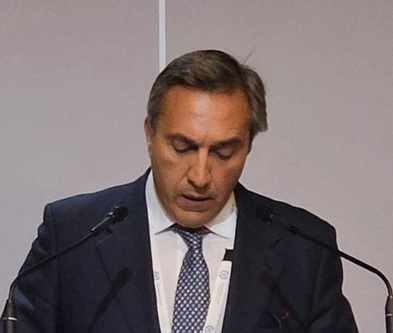
Opening San Marino to the outside world also means changing the way politics and public administration work. Francesco Mussoni (PDCS) spoke today, Monday 9 November, in the Foreign Affairs Committee on the Association Agreement with the European Union.
He began by recalling the crisis and isolation of the black-list years, when the decision to build a different relationship with Europe first took shape.
Now, he argued, the country needs skills and organisation to engage with Brussels, alongside greater investment in the identity of the state.
“This is also a moment of necessary symbolic celebration of a journey. I say this at the outset because I believe the reports attached by the Foreign Affairs Secretariat to the Committee, along with Secretary Beccari’s report on this item, could, from my point of view, cover most of the considerations already made — then taken up again with different emphases and arguments.
Not least Zeppa’s reasoning on the social and future direction of our country, which in some respects I find myself sharing.
I too feel the need to add a few comments, precisely to mark this moment which, as has been said, has been a long time in the making. I am one of those who, during the black-list governments, lived through the crisis first-hand — the sense of being surrounded and isolated as a country, bearing the brunt of these difficulties and of the need, as Secretary Beccari recalled, for a change of paradigm.
I believe that over the years, the various governments and political figures involved in this process and in the Association Agreement have sought — some more consciously than others — to bring about this shift in approach: moving from a country that was largely self-referential, known to itself but unknown to others, to a country with political and institutional relationships that place it in a position of greater openness. At the hardest moment for our economy and for the credibility of the state, the political class chose to build this infrastructure, this agreement, this negotiation that we are ratifying today, in order to create different premises from the situation we were living through at the time.
From my point of view, there is real awareness of this.
Today will be a great challenge from a technical standpoint, as the previous speaker noted, but also in terms of San Marino’s identity.
On one hand, there will be a process of rational harmonisation, since the agreement already contains choices of direction and approach; on the other, there will need to be a necessary cultural, social and political evolution of the ruling class and, in particular, of the public administration.
In our Republic there are sectors, individuals and businesses that already deal with the outside world on a daily basis and are forced to open up — mentally and technically — to mobilise in order to live, generate income, grow and remain competitive in the market.
Other groups tend to be more self-referential, more closed off: this is a characteristic feature of our system.
This agreement will push everyone even further to train, integrate, get involved, make choices, access more opportunities, and create conditions of greater freedom for families and individuals.
At the same time, it must strengthen the safeguards of our identity and ensure ever-greater investment in the identity-based structure of our state and our country. This is a process we will begin to see unfold over the coming years, not immediately, and it will require a highly mature political class.
Another major challenge this process will bring concerns the political class itself, which must add to its vocabulary and technical skills other things, other relationships.
The San Marino-Rome axis will no longer be enough on its own — it will remain central, of course — but there will now also be a San Marino-Brussels axis. Political forces and the political class will need to start structuring themselves with the people, organisation, resources, reasoning and preparation required for a path that also demands this kind of relationship.
I believe this is a truly important historic moment, one that lays the groundwork for the future of our country and our institutions, and that opens up challenges of change, integration and adaptation which will be part of the growth of our community.
A community that is geopolitically embedded within the European framework, yet with a strong sense of state identity and autonomy — because that is what the agreement states, and that has been the overarching approach pursued for years.
So thank you to all the parties, to all the councillors, and to all the political forces that have taken turns in government over these years — in the majority, but also in opposition — because the opposition, too, has played a constructive role with regard to the agreement.
Thanks also to those who, on the front line of the successive governments and majorities, withstood the pressure of fears, concerns, criticism and difficulties in carrying forward such important decisions.
It is thanks to this work by everyone that we can celebrate this moment today and move forward with the legislative process to ratify the agreement, as it has been structured and as set out in the documents attached to the Committee. My congratulations once again, thank you all for the work done, and let us continue in this direction.”