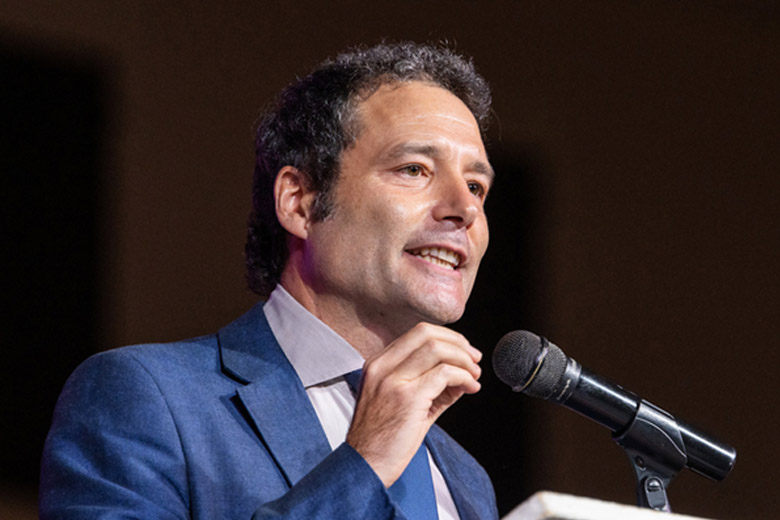
«With one hundred and twenty additional articles, debate could stretch to one hundred and twenty hours. That is the real problem, and that is where the mechanism of the time cap comes from». Manuel Ciavatta (PDCS) spoke during the examination of the articles of the bill “Amendments to the Regulation of the Grand and General Council” (Consiglio Grande e Generale) to explain the reasoning behind, and the workings of, the new time limit.
Ciavatta first clarified that the 25 hours must be calculated as sitting hours dedicated to examining the articles, once the general debate has concluded. The shift from 20 to 25 hours, he explained, stems from the majority’s attempt to move closer to the opposition’s request, which had called for five days.
The councillor then addressed the practical timing: under the current speaking-time rules, hundreds of amendments could translate into many days of sittings. The new system, combined with the alternation between majority or Government proposals and those of the opposition, should instead allow both sides to discuss a reasonable number of amendments. Ciavatta’s hope is that this will lead not only to shorter debates, but also to fewer amendments and better-structured proposals.
Below is the full text of Manuel Ciavatta’s (PDCS) remarks:
Manuel Ciavatta (PDCS): I am speaking only to clarify two points. The first concerns the shift from the twenty hours initially proposed to twenty-five hours. It is true that there was no genuine mediation as such, but we tried to meet the opposition’s request, which called for five days. That indication, however, was difficult to quantify, because with sittings like today’s, lasting six hours from 2pm to 8pm, five days would amount to thirty hours. I therefore ask that it be recorded, at least in the minutes, since this was the intention, that once the general debate has ended, twenty-five hours of sitting time dedicated to examining the articles must elapse. This makes the point clear. I must also briefly reply to Councillor Mularoni’s last observation. In fact, in at least the last two budget laws, if I recall correctly — from which the so-called development law emerged — the Government and the majority put forward almost no amendments to the text as tabled at first reading. The opposition, on the other hand, tabled one hundred or one hundred and fifty amendments, most of which reproposed content already submitted the previous year, or even in earlier years still. Under the current Regulation and timing, for every article and every amendment, five minutes are allotted to the proposer and four minutes to each councillor. I mention this also to explain to citizens what we are talking about. With fifteen or sixteen opposition councillors, four minutes multiplied by sixteen means more than an hour for every single article. If there are one hundred and twenty additional articles, that can become one hundred and twenty hours of debate. For a Council that works, under normal conditions, ten hours a day, it would take ten or twelve days just to examine one law. That is the real problem, and that is where the mechanism of the time cap comes from. The idea is that, once the general debate has ended and twenty-five hours of examining the articles have passed — during which articles and amendments from the majority or Government are alternated with those from the opposition — each side will have the opportunity to present and discuss a reasonable number of proposals. I therefore expect that, from now on, there may perhaps be fewer articles to discuss, but that they will be better structured. I hope that this measure will bring about greater legislative quality, not merely a reduction in time, though that too will certainly follow.