Fifteen years after the visit of Benedict XVI, San Marino is once again preparing to welcome a Pontiff. But what does the arrival of Pope Leo XIV on the Titan mean today? And how much, behind the pastoral dimension, does the diplomatic significance weigh in a visit that once again brings the Holy See into relation with one of the world’s oldest and smallest republics? Peace, human dignity, the common good, the international role of microstates, and the relationship between the Church and a Europe crossed by new tensions are among the themes that will accompany Saturday’s appointment. In the background lies also a comparison between two pontificates — that of Benedict XVI and that of Leo XIV — different in historical context but linked, according to Don Roberto Regoli, by a cultural and theological continuity that also passes through the thought of Saint Augustine.
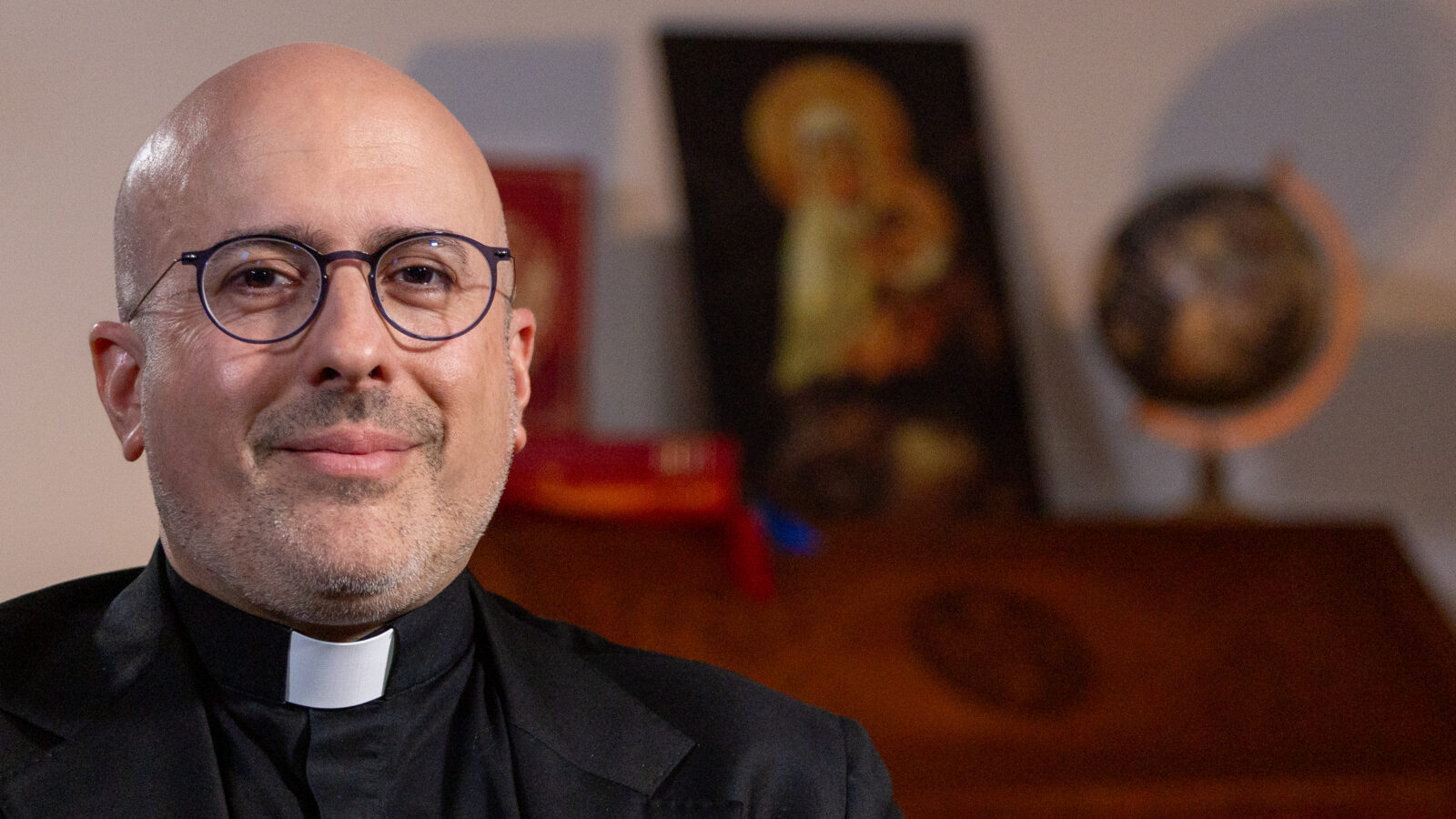
The person offering these reflections is a scholar who knows closely the contemporary history of the Church and, in particular, the pontificate of Joseph Ratzinger. Don Roberto Regoli is a full professor at the Faculty of Church History and Cultural Heritage of the Pontifical Gregorian University and director of the scientific journal “Archivum Historiae Pontificiae.” Since January 2026 he has also been president of the Vatican Joseph Ratzinger – Benedict XVI Foundation, succeeding Father Federico Lombardi, and is overseeing preparations for the centenary of Joseph Ratzinger’s birth, which will fall in 2027.
Professor Regoli, let’s start with Benedict XVI’s 2011 visit. Fifteen years on, how relevant is the message he delivered to San Marino at the time?
«That address was naturally very much tied to the context of the time. We were in the years immediately following the 2008 international economic and financial crisis, and Benedict XVI also addressed issues that directly concerned San Marino. But within that speech we find some of the great lines of Catholic social doctrine: the common good, human dignity and peace. These are themes that remain fully relevant even fifteen years later. If we think of Pope Leo XIV’s first encyclical, Magnifica Humanitas, we find this same commitment of Catholicism to the human person. Naturally, from a Catholic point of view, this concerns a human person redeemed through Christ, but there are languages and values on which believers and non-believers can understand one another and meet. In this sense we can recognize elements of continuity between the pontificates. And on the theme of peace, in particular, San Marino and the Holy See may well find themselves pursuing the same causes».
More specifically, what are the elements of continuity between Benedict XVI and Leo XIV?
«One very interesting element is Saint Augustine. Leo XIV is a spiritual son of Augustine, while Benedict XVI was, we might say, his intellectual son: he studied his thought, his theology and his vision. This constitutes a significant point of contact. From Benedict’s years to today, however, the world has changed. Leo XIV’s interventions on social doctrine and, in particular, on the theme of artificial intelligence, respond to new urgencies. It is not so much a change in theological lines as the need to grapple with new challenges. Reflection on the identity of man and his purpose becomes highly topical once again at a time when artificial intelligence, and above all transhumanism, raise questions about the identity and integrity of the human person. The challenges are new, but they can be addressed through a philosophical, theological and cultural heritage that comes from far back».
Let’s turn to Leo XIV’s visit. Is it correct to attribute to it, beyond its pastoral significance, a diplomatic value as well?
«I share that reading. When a Pope travels outside Rome, the trip does not take on only a pastoral character but also acquires the traits of an official visit, with all the political and diplomatic consequences that entails. In this case there is certainly a primary pastoral dimension: the Pope is coming to San Marino as part of a visit that also has the Rimini Meeting as its occasion. But when the Pontiff enters a State, that visit inevitably also becomes an opportunity to renew and strengthen relations between the two entities».
San Marino also presents a particular interweaving between its civil history and its Christian roots. How much does this element weigh?
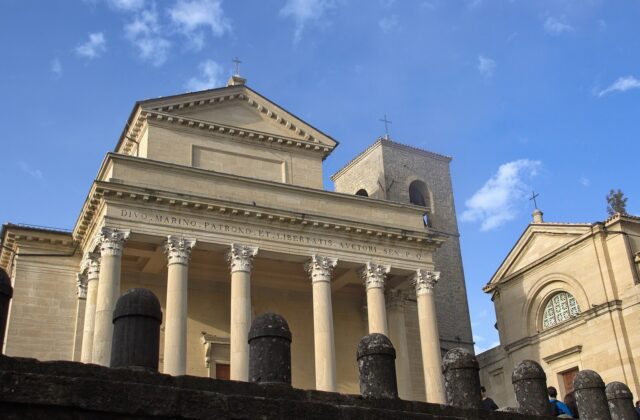
«It’s an important aspect. The very historical and meta-historical narrative of the Republic originates with the figure of the deacon Marinus. In San Marino we find a very strong coincidence between certain religious and civil dimensions: think of the holidays, or of the Basilica of San Marino itself, where the seat of the Captains Regent is located. Even while maintaining the distinction between Church and State, there are therefore elements of overlap between the religious and civil life of the Republic. The Pope, moreover, will personally meet the political authorities during the visit. It is inevitable that political and diplomatic themes will also be touched upon».
What can a small reality like San Marino, with such deep Christian roots, offer to the Church?
«This pontificate is showing particular attention to Europe and its cultural tradition, also looking at the so-called small states. A few months ago, for example, Leo XIV visited the Principality of Monaco. The Pope is therefore not looking only at large countries, such as France, which he will visit in the coming weeks, but also at microstates, recognizing that their role is not limited to the local dimension. Small states sit in international forums, participate in multilateralism, and vote. Fostering bilateral relations with these entities is therefore not irrelevant from a broader perspective. One of the aspects that strikes me most about this pontificate is precisely this renewed attention toward Europe».
This attention to small realities seems to be one of the traits emerging in this pontificate. What other elements do you see most clearly?
«I would distinguish two levels: that of the internal dynamics of the Church, and that of the relationship between the Church, society and States. On the first front, Leo XIV appears very consistent with his own motto, In Illo uno unum: the central theme is unity. In his speeches he maintains a constructive approach, offers a positive horizon, encourages, and tends to highlight the good he finds».
A call for unity that comes at a time marked by strong polarization.
«Exactly. In recent decades we have witnessed very strong polarization even within international Catholicism. These are dynamics similar to those we observe in Western societies, where the difficulties of confrontation and dialogue are increasing. Leo XIV is working to ensure that these polarizations can be softened through a dialogue of communion. But this search for what unites does not concern only the internal life of the Church. The Pope brings it also into the relationship with civil society and with States. In his travels he tends to highlight the cultural and spiritual traditions of countries, seeking to show what contribution they can still offer to the present. At the center remain the human person, human dignity, the common good, and attention toward those most in need».
Looking ahead to Saturday’s visit, what message can we expect from Leo XIV? And which words should San Marino pay closest attention to?
«Normally, when the Pope makes a trip, in his public speeches we find two registers. The first is more general and also looks at the international dimension; the second instead enters into the concrete reality of the country being visited. This also happened with Benedict XVI, who went so far as to speak about the issue of cross-border workers: it might have seemed like a minor detail, but for San Marino it represented a vital issue. We can expect something similar this time as well: a broader cultural register alongside one directly tied to the needs of the Republic».
Could the Pope’s speech therefore also tell us something about how the Holy See views San Marino today?
«Yes, and this is precisely one of the most interesting aspects. From what the Pontiff says we will be able to understand what information has been gathered on the San Marino situation by the diplomacy of the Holy See and by the local Church. The speech will therefore allow us to understand how the Church reads San Marino today, what it considers its strengths to be, and what it considers its weaknesses. It will be an element to observe with particular attention».