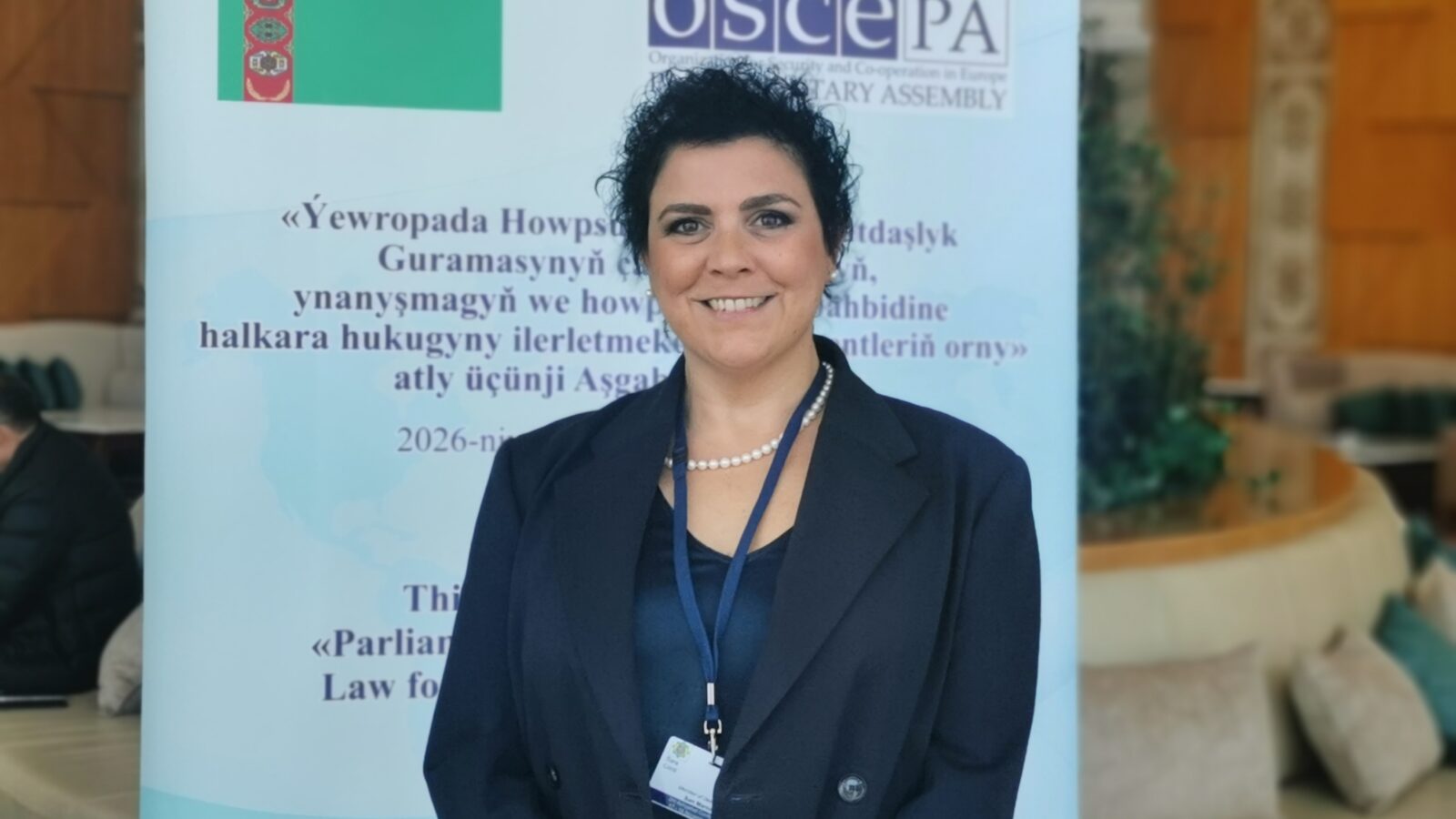
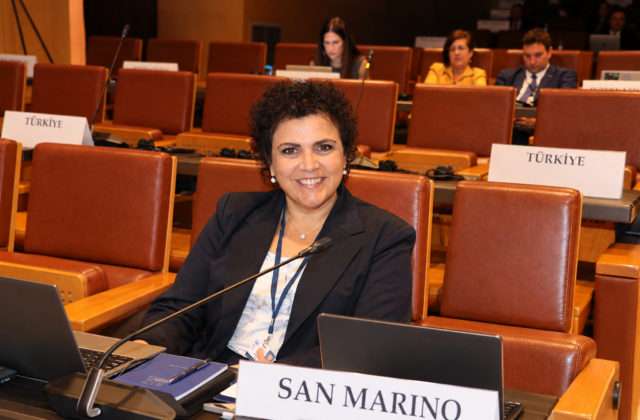
Today we launch a new column of political commentary, a space dedicated to analysis and debate on the key issues shaping current affairs in San Marino. Accompanying us on this journey will be contributions from Sara Conti, a member of Repubblica Futura, who will offer her perspective on the questions at the heart of the country’s political and institutional debate.
________
In an era marked by conflict and geopolitical polarization, the role of small states is once again central. Lacking hegemonic ambitions and military apparatuses, they can turn their small scale into moral credibility and a capacity for listening. This is the case of the Republic of San Marino, which today has the opportunity to relaunch its vocation as a land of dialogue and peace.
San Marino’s foreign policy is rooted in active neutrality and the defence of international law. As early as 1975, among the 35 original signatories of the Helsinki Final Act, Titano demonstrated its ability to contribute to the architecture of collective security.
Its subsequent accession to the United Nations and the Council of Europe consolidated a steady commitment to human rights and the peaceful resolution of disputes.
And yet, the idea of making San Marino a permanent seat of mediation — a kind of “Geneva of the Adriatic” — has long remained unfulfilled.
This is a reflection that took shape in me with particular force during my recent direct experience: taking part, as a member of the San Marino delegation to the OSCE Parliamentary Assembly, in the third Ashgabat Conference, I was struck by how Turkmenistan is seeking its own path of openness, making neutrality and dialogue its banner to win a place in the international community, despite a closed political system far removed from democratic standards.
I then asked myself why we could not do the same, with far greater standing, drawing on our position at the heart of Europe and our history as the world’s oldest republic.
Today the circumstances offer a unique opportunity. The Association Agreement with the European Union, signed in Brussels on 19 October 2026, opens a new historical chapter: it guarantees access to the internal market while preserving sovereignty and identity, placing us on a singular threshold — close enough to the EU to share its values, yet autonomous enough to engage in dialogue with everyone.
Seizing this opportunity, however, requires a concrete political vision: we must invest in modern infrastructure capable of hosting high-level conferences and summits, embracing the diplomacy of dialogue also as a strategic lever for the country’s economic and cultural growth.
Reviving the pillars of the UN Charter and the Helsinki Final Act, and finally transforming Titano into a permanent hub for discussion on global challenges — where human dignity and the rule of law once again become the sole compass guiding relations among peoples — could open a new chapter for the Republic of San Marino, one marked by greater credibility and a more central role on the European and international stage.